Understanding your child’s learning style
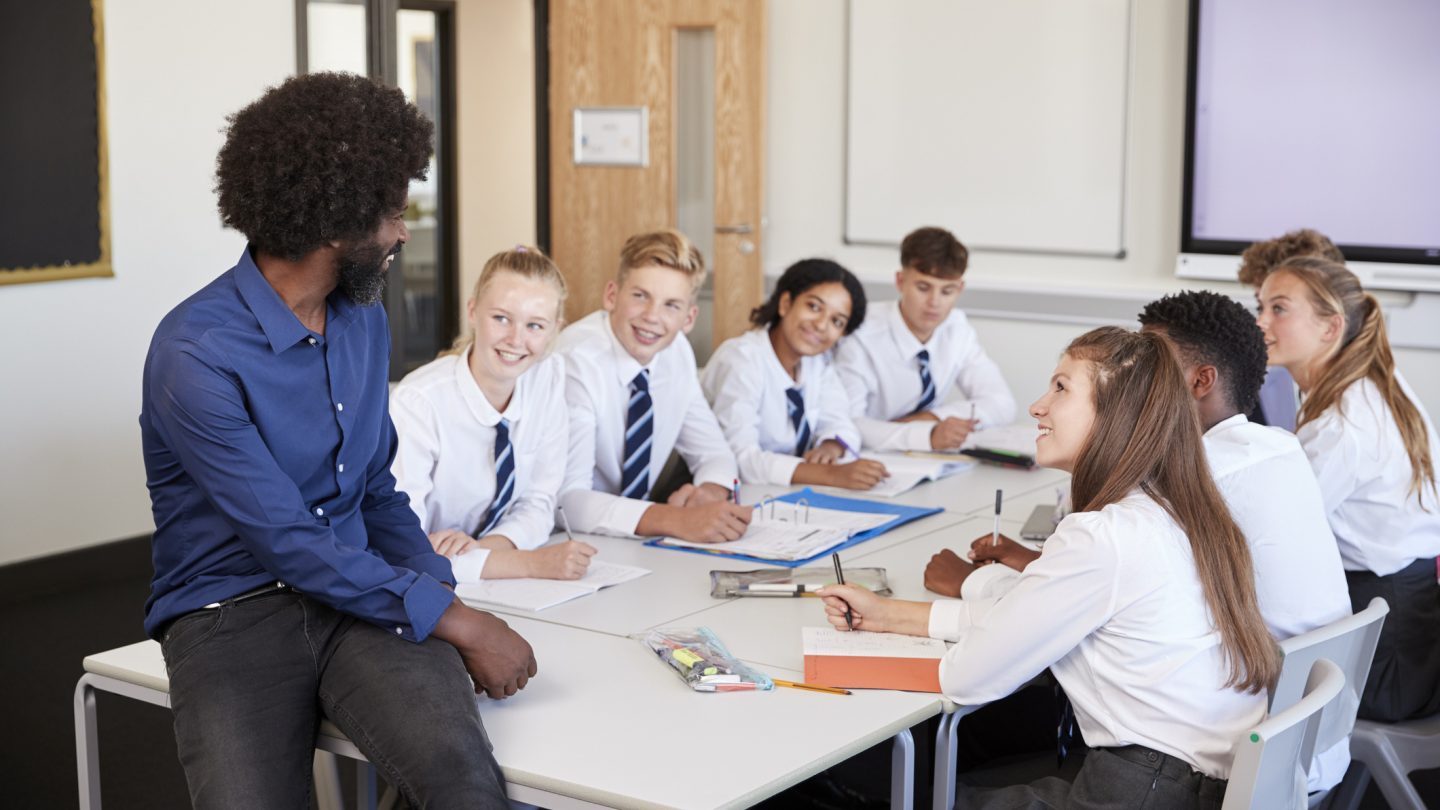 Image: Teacher speaking to a group of secondary school pupils in a classroom.
While no two children are exactly alike, many tend to favour one of three broad learning styles: visual, auditory or kinaesthetic. By identifying your child’s preferred way of learning, you can tailor support at home, help boost their confidence and work more effectively with teachers to create an environment that suits their strengths.
Remember! While recognising a child’s learning style can be a helpful way to support their engagement and confidence, it’s important to note that it does not guarantee improved grades or future academic or career success.

Visual learners
Visual learners absorb information best when they can see it. They often think in pictures, benefit from diagrams, charts and written instructions, and may enjoy activities like drawing, reading or watching videos.
Signs your child might be a visual learner:
- They prefer reading to listening
- They are drawn to colours, patterns, and design
- They remember faces more easily than names
- They enjoy organising things visually (e.g. colour coding or arranging toys by shape)
Support strategies:
- Use mind maps or visual planners to organise ideas
- Provide highlighters and coloured pens for note-taking
- Display charts, flashcards or posters in study areas
- Encourage drawing or sketching ideas to help understanding
Auditory learners
Auditory learners process information most effectively through listening. They may enjoy talking through ideas, listening to stories or explanations and benefit from verbal repetition or discussion.
Signs your child might be an auditory learner:
- They enjoy reading aloud or being read to
- They remember what people say more than what they see
- They like music, rhythm, and word games
- They often talk through problems or instructions
Support strategies:
- Use audiobooks or educational podcasts
- Encourage them to read aloud or explain ideas verbally
- Set information to music or rhythm to aid memorisation
- Allow time for discussion and conversation-based learning
Kinaesthetic learners
Kinaesthetic learners learn best through movement and touch. They thrive when actively engaged, whether through hands-on activities, experiments or role-playing. Sitting still for long periods can be especially challenging for them.
Signs your child might be a kinaesthetic learner:
- They fidget or move around while thinking
- They enjoy building, crafting or physical play
- They learn best by doing rather than watching or listening
- They may struggle to sit through long explanations
Support strategies:
- Use physical objects for maths or science (e.g. counters, models)
- Incorporate movement into learning — pacing while reciting facts or acting out a story
- Allow frequent breaks during homework or study sessions
- Encourage real-world learning through practical tasks like cooking or DIY projects
It’s important to remember that most children are a mix of styles rather than fitting neatly into just one category. Recognising their dominant learning preferences can help you tailor your approach, making learning more enjoyable and effective. Be observant, flexible and patient, and talk to your child about what works best for them. With the right support, every child can find joy and success in their learning journey.
-
Why parental involvement in schools matters
25 July 2025Research consistently highlights the significant impact of parent involvement on a child’s academic performance. From boosting motivation and improving behaviour to enhancing academic outcomes, the benefits are clear. -
 Homework can often feel like a battleground between children and parents. But with a little structure, patience, and encouragement, it’s possible to turn homework time into a calm and productive part of the day.