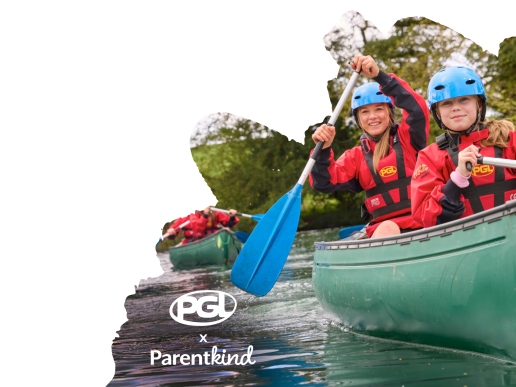
Summer adventure ideas for everyone — Sponsored by outdoor adventure provider PGL
Indoor adventure ideas
 Image: Three girls reading and laughing on a bunk bed Credit: PGL
Younger children
Indoor obstacle courses
Use cushions, masking tape, tunnels and chairs to create exciting challenges around the house
Treasure hunts
Hide clues, toys or treats around the home and turn everyday spaces into adventure zones.
Blanket fort expeditions
Build cosy dens with blankets and pillows for reading, storytelling or pretend camping.
Imagination games
Create simple role-play adventures using homemade maps, costumes and imagination.
Rescue-the-toy games
Set up missions where children must rescue favourite toys from “danger”.
Adventure storytelling
Take turns creating stories where each family member adds the next part of the adventure.
Older children
Escape-room style puzzles
Create riddles, clues and timed challenges for children to solve together.
Build-and-test challenges
See who can build the tallest tower, strongest bridge or fastest paper plane.
Indoor camping
Pitch a tent indoors, use sleeping bags and enjoy a night of games, snacks and storytelling.
Mini Olympics
Create family competitions with silly challenges, balancing games and timed activities.
Mystery-solving adventures
Invent mysteries around the house for children to investigate and solve.
DIY survival scenarios
Challenge children to build shelters, create emergency kits or plan imaginary survival situations.
Teenagers
Cooking challenges
Try mystery ingredient contests, themed dinners or bake-off style competitions.
Creative competitions
Photography, music, drawing or filmmaking challenges can spark creativity and confidence.
Photography adventures
Set photo prompts around the home or local area and compare everyone’s favourite shots.
Board and card game tournaments
Create family leagues with prizes, scoreboards and themed evenings.
Indoor fitness challenges
Set personal goals, obstacle courses or movement-based competitions.
Create-your-own challenge nights
Let teenagers design the evening’s activities and lead the adventure themselves.
These kinds of playful challenges can help children build the confidence to try even bigger adventures outdoors too.

Outdoor adventure ideas
 Image: A boy setting up a tent in a sunny forest Credit: PGL
Younger children
Nature treasure hunts
Search for leaves, feathers, flowers, colours or shapes while exploring outdoors.
Mini beast safaris
Look under logs, stones and plants to discover tiny creatures and habitats.
Adventure walks
Turn ordinary walks into missions with maps, spotting challenges or storytelling prompts.
Mud kitchens
Old pots, spoons and muddy imagination can provide hours of sensory fun.
Puddle jumping
Rainy days can become adventures with waterproofs, wellies and permission to splash.
Park exploration
Challenge children to try every climbing frame, path or activity in a local park.
Older children
Orienteering
Introduce simple maps and navigation skills during walks or park visits.
Bike adventures
Explore local cycling routes, parks or trails together safely.
Den building
Use sticks, branches and natural materials to create outdoor hideaways.
Outdoor scavenger hunts
Create themed lists for children to find while exploring local spaces.
Nature photography
Encourage children to capture interesting textures, wildlife and scenery.
Survival skills basics
Practise knot tying, shelter building, lighting a campfire or simple outdoor cooking skills.
Teenagers
Hiking routes
Explore local walking trails and encourage teenagers to help plan routes and stops.
Geocaching
Turn walks into treasure hunts using hidden caches and navigation skills.
Outdoor fitness trails
Use local parks or outdoor gyms for active family challenges.
Wild swimming guidance
Research safe locations, water safety and local advice before trying open water swimming.
Community and environmental projects
Litter picking, gardening or conservation activities can help teenagers feel connected to their community.
Exploring local areas independently
As confidence grows, teenagers often enjoy having more responsibility, problem-solving independently and taking ownership of their own adventures.
Dr John Allan, Head of Impact & Breakthrough Learning at PGL Beyond“After spending time outdoors on a daily basis, improvements can be seen in children’s adaptability, physical fitness, sociability and even a higher ability to concentrate. Importantly, these benefits are more pronounced for underachievers and the most vulnerable children, especially when outdoor adventure experiences [.…] are tailored to meet their needs.”
Remember! Experiences that encourage challenge, teamwork and exploration can have a lasting impact on children’s confidence both at home, in school and into the future.

Stem adventures and curious minds
 Image: A girl carving a stick in the forest Credit: PGL
Adventure and learning go hand in hand. STEM activities encourage children to experiment, solve problems and explore how the world works.
At home science challenges
Try simple experiments at home with hands-on ideas to spark curiosity and inspire young minds to explore the world around them. Download your activity packs from British Science week.
Engineering builds
Create towers, bridges or marble runs using recycled materials.
Make a compass
Learn navigation basics while exploring magnets and direction.
Build a parachute
Test different materials and designs to see what works best.
Stargazing
Explore constellations, planets and the night sky together.
Weather experiments
Track rainfall, make wind socks or explore cloud formations.
Coding treasure hunts
Combine problem-solving with clues, codes and challenges. Or join a code club through your library or other volunteers in your area.
Investigation and discovery games
Encourage children to ask questions, make predictions and test ideas.
Curiosity-led learning
Follow children’s interests and let their questions guide activities and exploration.
Problem-solving through adventure
Adventure naturally encourages teamwork, creativity and resilience.
Real-world exploration
Museums, nature reserves, transport systems and local landmarks can all become learning adventures.
Nature science activities
Investigate plants, insects, habitats and ecosystems outdoors. The 30 Days Wild initiative by The Wildlife Trusts will get you out and about in no time!
Encourage experimentation
Celebrate trying, testing and learning, even when things don’t go to plan.
Studies suggest there are multiple ways in which children grow – physically, socially, and emotionally – when learning outside, vital not just for their general health and wellbeing but also for enhancing their academic success (e.g. Sheldrake et al, 2019).

Sensory and messy adventures
Sensory play helps children explore the world through touch, sound, movement and creativity. It can also support emotional regulation, confidence and communication.
Some of the most memorable adventures are the messiest ones. Mud play, water challenges and outdoor exploration encourage children to experiment, problem-solve and engage their senses in fun and meaningful ways. Whether they’re digging in a mud kitchen, transporting water between containers or rescuing frozen toys during an ice excavation challenge, sensory activities help children learn through hands-on discovery.
Nature also provides endless opportunities for sensory adventure. Texture and sound walks can encourage children to slow down and notice crunchy leaves, rough tree bark, birdsong or flowing water, while sensory scavenger hunts turn outdoor spaces into exciting explorations of colour, smell, texture and movement. Collecting leaves, stones, flowers and sticks can inspire imaginative play and creative activities long after the adventure has finished.
Sensory adventures don’t always have to be energetic or messy either. For some children, calmer sensory activities can feel more enjoyable and regulating. Sensory bottles, play dough, fidget activities and sensory trays can provide opportunities for exploration in a quieter, more controlled way.
Adventure through touch, sound and movement can also support emotional wellbeing. Outdoor play, physical activity and sensory experiences can help children feel calmer, more balanced and more connected to the world around them. The important thing is finding activities that suit your child’s interests, energy levels and sensory preferences, because every child experiences adventure differently.

Adventures for children with SEND
 Image: An English coastline at sunset Credit: PGL
Adventure should be accessible for every child. Every family will approach adventure differently, and flexibility is key.
Adventure can mean something different for every child — and that’s okay. For some children, adventure might be climbing trees or exploring new places, while for others it could be sensory play at home, a calm walk in nature or trying a new activity in a familiar environment. The most important thing is creating experiences that feel enjoyable, supportive and achievable for your child.
Children are often more confident when activities feel predictable and adaptable. Familiar routines, clear expectations and visual supports such as schedules, timers or step-by-step instructions can help children feel secure while trying something new. Many children also benefit from low-pressure exploration, where they can engage at their own pace without expectations or pressure to join in every part of an activity.
Small successes can make a big difference over time. Confidence often grows gradually, through repeated positive experiences and encouragement from trusted adults. Quiet outdoor spaces, sensory-friendly activities and opportunities for calm exploration may feel more manageable for some children, especially when activities are tailored to their interests and comfort levels.
Some ideas to try:
Sensory-friendly adventures
Choose activities that suit your child’s sensory preferences, whether that’s messy play, movement-based activities, quiet nature walks or calm creative play.
Quiet outdoor experiences
Parks during quieter times, woodland walks or gentle exploring can help children enjoy outdoor adventure without feeling overwhelmed.
Flexible approaches to play
Be prepared to adapt activities depending on energy levels, mood or sensory needs. Sometimes changing one small part of an activity can make it feel much more accessible.
Accessible local opportunities
Look out for inclusive family sessions, adapted activities and SEND-friendly community events in your local area.
Remember! Celebrate your child’s strengths and progress in whatever form they come. Parents and caregivers know their children best, and there is no ‘right’ way to experience adventure. What matters most is creating opportunities for connection, confidence and enjoyment in ways that work for your family.


Family days out
Adventure doesn’t need you to travel far afield. Some of the best family days out or stays can happen close to home with simple ideas and a little imagination. Remember! Adventure can happen at every level, from simple days or stays close to home to bigger experiences that help children grow in confidence and independence and reconnect busy families.
Creating memorable family adventures is about spending time together. Children often care far more about the experience itself than how much it costs, and simple activities can quickly become favourite family memories.
Exploring locally is a great place to start. A different walking route, a visit to a nearby park or a day spent discovering somewhere new in your local area can feel just as exciting to children as a bigger trip further away. Parks, woods, beaches, community spaces and town centres can all become places for adventure with a little creativity.
You also don’t need expensive equipment to enjoy exploring together. Waterproofs, wellies, snacks and curiosity are often enough. A scavenger hunt, a nature challenge or an afternoon of puddle jumping can ignite their passion for big adventures.
Here are some of our favourite ideas for family adventures:
 Image: A man and group of children smiling around a fire Credit: PGL
Go outside
Pack a picnic, visit a local park, create a scavenger hunt, feed ducks, explore a new walking route or have a ‘tourist day’ in your own town.
Rainy day activities on a budget
Libraries, museums, indoor dens, baking challenges and home-based obstacle courses can all provide affordable fun when the weather changes.
Making the most of local spaces
Community centres, local trails, outdoor gyms and green spaces often offer free or low-cost opportunities for family adventures.
Affordable family connection ideas
Movie nights at home, storytelling evenings, family bike rides or screen-free challenge nights can all help families connect without spending much money.
Package holidays in the UK
All-inclusive UK family holidays can offer great value, with accommodation, meals, entertainment and activities often included in one price. They can make planning easier, help families stick to a budget and provide plenty of opportunities for fun and relaxation without the added cost and stress of travelling abroad.
The most meaningful adventures are rarely the most expensive and lavish ones. Shared laughter, discovering something new together and making time for connection are often what children remember most.
Make it a family adventure
 Image: A pair of excited children wearing climbing harnesses, and an older woman supervising them Credit: PGL
Adventure is even more memorable when families experience it together. Trying something new, encouraging one another through challenges and stepping outside everyday routines can help families build confidence, connection and lasting memories as a team.
Whether it’s tackling outdoor activities together, sharing laughs during new experiences or celebrating achievements big and small, family adventures create opportunities to reconnect away from the distractions of everyday life. They can help children grow in confidence while giving parents the chance to see their children thrive in new environments too.
For families looking to take their adventures a little further this summer, PGL Family Adventures offer the chance to get active, try exciting activities together and create unforgettable shared experiences along the way.